 Posted by
 Introduction: The “Scandi” Trap (I’ve Fallen Into It Too)
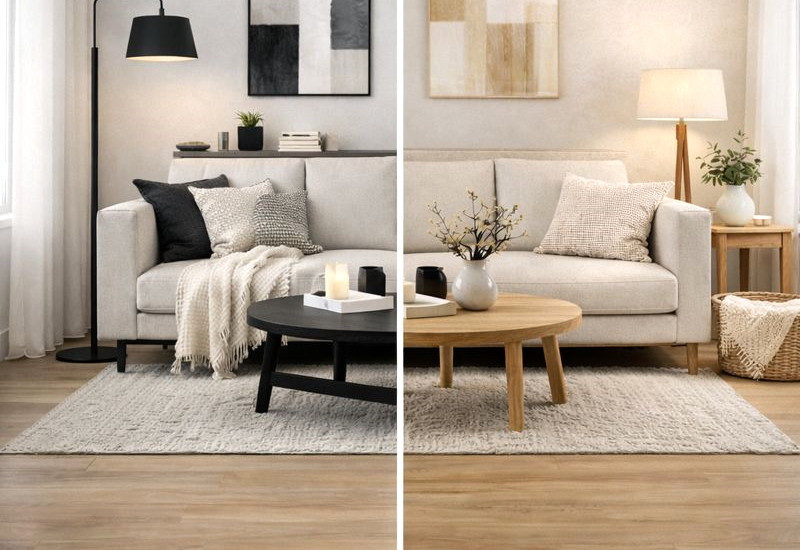
Let’s be honest: Scandi and Scandinavian get used like they’re the same thing. Same vibe. Same Pinterest board. Same beige couch. Same “where did you get that lamp?” comments.
But in real-life decorating, the difference matters-because “Scandi” is often the modern, trend-friendly shortcut, while “Scandinavian” is the deeper, classic design DNA: practical, minimal, warm, and built around light, function, and comfort.
So if you’re in the USA trying to nail scandi living room decor without ending up with a cold, empty space… you’re in the right place. I’ll show you what to copy, what to skip, and how to pull it off even if you live in a small apartment and your budget is more “Target run” than “designer showroom.”
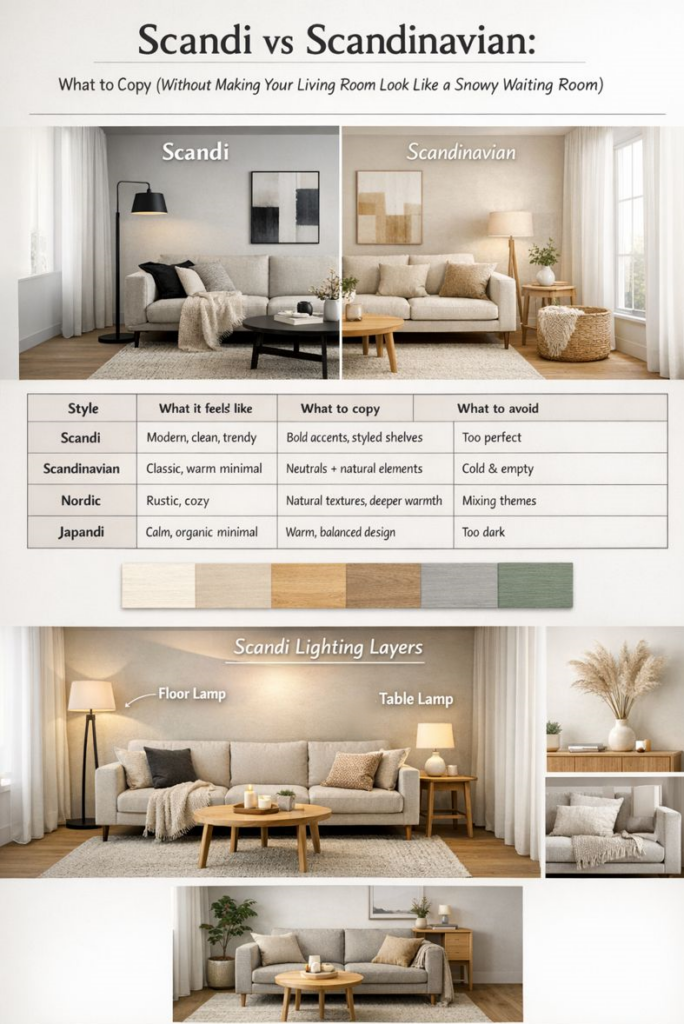
Scandi-vs-Scandinavian-living-room
What “Scandi” Really Means (In 2026 Internet English)
Scandi is basically the casual nickname for Scandinavian style-but online, it often means:
- More modern
- More “styled”
- More trend-driven
- More Instagram-ready
Think: the same Scandinavian roots, but with a sharper edge. A little more contrast. A little more “I bought this candle on purpose.”
Meanwhile, Scandinavian living room decor at its core is about clean lines, functionality, and minimalism-with warmth baked in.
Quick way to remember it:
- Scandinavian = the whole cookbook
- Scandi = the 5 viral recipes everyone makes
The Copy Checklist: What to Steal from Both Styles
If you only copy five things, copy these. You’ll get the look fast, without the “sterile showroom” effect.
1) Copy the light + neutral base (then make it yours)
A Scandinavian living room usually starts with light neutrals-white, beige, grey-because it makes spaces feel airy and bigger. IKEA specifically calls out light and neutral colors (white/grey/beige) as a foundation for Scandinavian interiors and living rooms.
What to do:
- Walls: warm white, soft off-white, or a gentle greige
- Big furniture: neutral
- Then add 1–2 accent colors (muted or bold-your choice)
2) Copy the natural materials (this is the “expensive” part)
This is where it stops looking like a rental listing photo.
- Light wood (oak, ash tones)
- Linen (curtains, pillow covers)
- Wool (throws, rugs)
- Stone/ceramic (vases, bowls)
3) Copy the “less clutter, more intention” rule
Scandi interior design isn’t about owning nothing. It’s about editing.
If it doesn’t help the room (function) or the mood (comfort), it’s out.
4) Copy hygge (cozy) without going full cabin
“Hygge” is basically cozy comfort done on purpose-textiles, candles, soft lighting, calm neutrals. Nordic Nest sums it up with tips like tactile textiles, candles, calming neutrals, natural elements, and soft lighting.
And The Spruce highlights cozy Scandi living room ideas like using candles and soft ambient lighting.
5) Copy layered lighting (this is where most people fail)
If you only use one overhead light, your “Scandi” room will look like a dentist office.
Layering lighting is a big deal in cozy, Nordic-leaning spaces.
Minimum setup:
- 1 floor lamp
- 1 table lamp
- optional: plug-in pendant or wall sconce
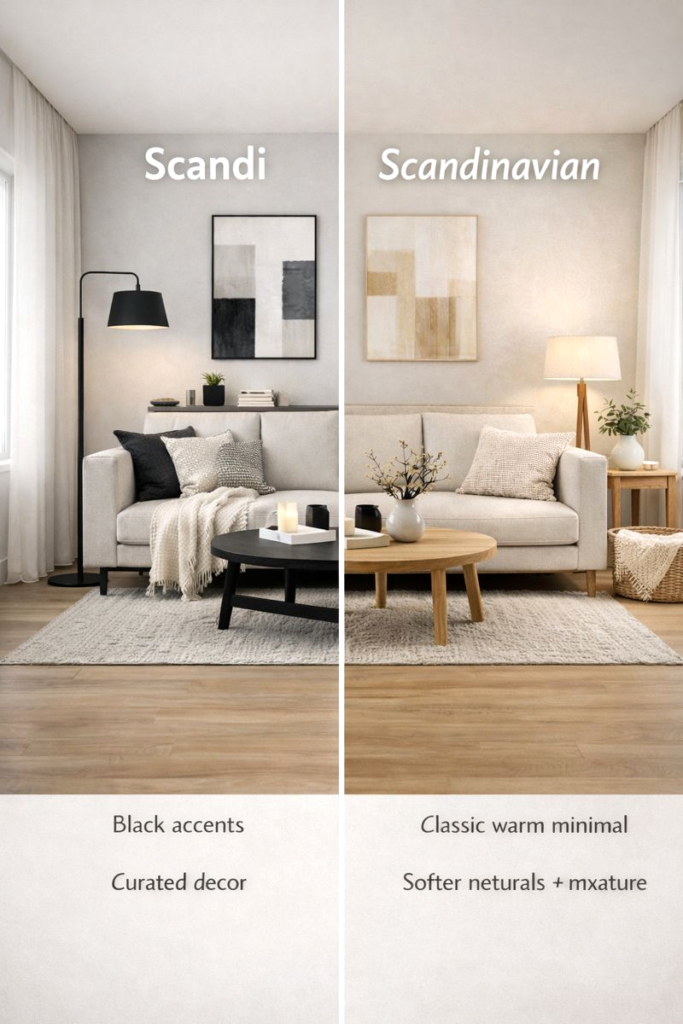
Scandi vs Scandinavian comparison
Table: “Scandi” vs “Scandinavian” vs “Nordic” vs “Japandi” (Fast Comparison)
| Style | What it feels like | What to copy | What to avoid |
| Scandi | Modern, clean, trendy | bold-but-simple accents, black details, styled shelves | too much “perfect minimalism” |
| Scandinavian | Classic, functional, warm minimal | light neutrals + natural materials + practical layout | making it cold/empty |
| Nordic | Broader region vibe | rustic touches, deeper coziness, natural texture | mixing too many themes |
| Japandi | Calm, earthy, minimal-luxe | organic textures + warm minimalism | going too dark without enough light |
Japandi is widely described as a blend of Scandinavian and Japanese design principles-minimal, functional, warm, and natural.
And The Spruce notes “Scandi vs Nordic” can be framed as Scandi being more modern while Nordic can lean more rustic.
FAQ Section: “Scandi Living Room Decor” Questions People Actually Ask
1) What does “Scandi” living room decor mean?
It’s the modern, internet-friendly shorthand for Scandinavian-inspired decor: neutral base, clean lines, cozy textures, and calm styling-usually with a slightly trendier finish.
2) What are the key rules of Scandinavian style (so it doesn’t look cold/empty)?
My simple rules:
- Warm neutrals > icy whites
- Texture is mandatory (wool, linen, knits)
- Lighting layers (lamps, not just ceiling lights)
- Keep surfaces calm (one tray beats ten tiny objects)
3) What colors work best (white vs beige vs grey)?
IKEA’s guidance for Scandinavian living rooms points to white, beige (light wood), and grey, often with playful accent colors added.
My take:
- White = bright, but can go sterile fast
- Beige/oat = warm, easiest “cozy Scandi” shortcut
- Grey = works best with warm wood + cream textiles
4) What materials are “most Scandi”?
Light woods, wool, linen, cotton, ceramic, glass, leather accents-natural materials that look good in daylight and even better at night.
5) How do I make it cozy (hygge) instead of sterile?
Steal Nordic Nest’s hygge checklist: textiles, candles, calming neutrals, natural elements, soft lighting.
Then add one personal thing (a book stack, a framed photo, a vintage find). The room should look lived-in, not staged.
6) What lighting should I use for a Scandi vibe?
Soft, warm, layered lighting. The Spruce explicitly calls out cozy candlelight + soft ambient lighting for Scandi living rooms.
If you rent, designers often recommend plug-in lighting solutions and layered light sources to warm up a space.
7) How do I decorate a small Scandi living room?
Use “light + legs + lift”:
- light palette
- furniture with visible legs
- shelves and storage that keep floors clear
8) What’s the best Scandi furniture starter set?
- compact sofa in a neutral fabric
- light wood coffee table
- simple media console / storage
- one rug with texture
- one accent chair (optional)
Then style with throws, pillows, and lighting.
9) How do I style Scandi wall decor?
Think: minimal art, simple frames, small gallery wall, floating shelf with breathing room. You want the wall to feel calm, not busy.
10) How do I add plants without clutter?
Use one statement plant (like a fiddle leaf fig or rubber plant) and one small plant on a shelf. Done. “Greenery everywhere” is nice, but it can turn into visual noise fast.
11) What’s the difference between Scandinavian, Nordic, and Japandi?
Short version:
- Scandinavian = classic design from Scandinavian countries
- Nordic = broader regional umbrella
- Japandi = fusion of Japanese + Scandinavian principles
12) Can Scandi decor be budget-friendly?
Absolutely. Start with the neutral foundation and add texture slowly. IKEA even frames Scandinavian style as light, simple, and adaptable-perfect for budget-friendly building blocks.
“What to Copy” Action Plan (So You Can Actually Do This This Weekend)
Step 1: Pick your lane (Scandi-modern or Scandinavian-classic)
Ask yourself:
- Do you want it crisp and modern? (Scandi)
- Or soft and timeless? (Scandinavian)
Either way works. Just don’t mix five styles and call it “Nordic.” That’s how you end up with a room that looks like it has commitment issues.
Step 2: Lock the basics (palette + wood tone + textiles)
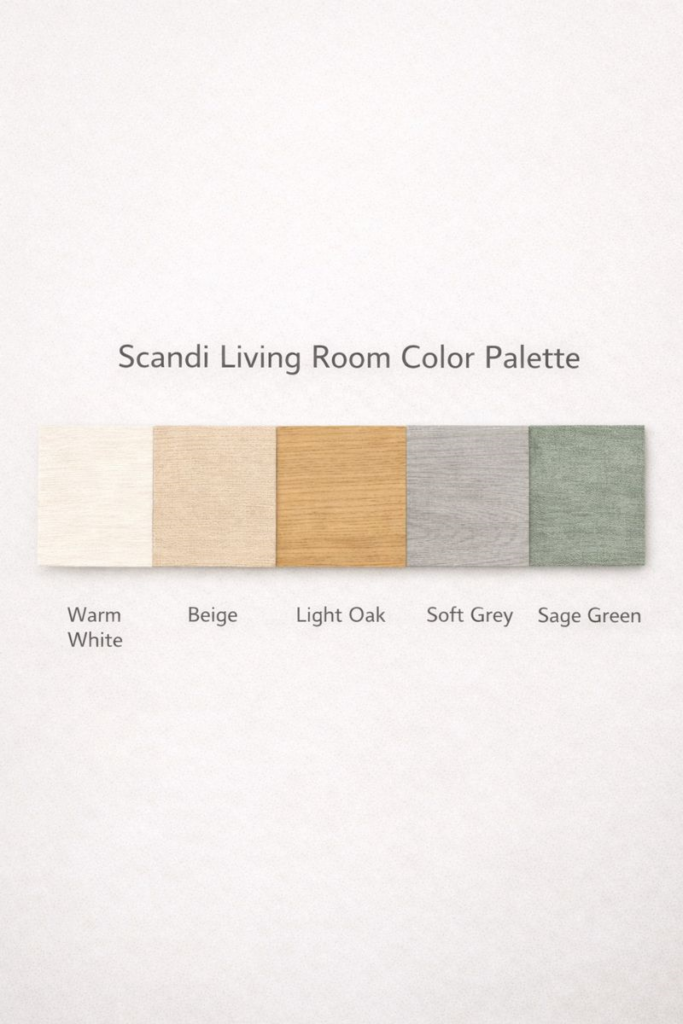
Scandi living room color palette.
Use this mini checklist:
| Element | Safe Scandi choice | Safe Scandinavian choice |
| Walls | warm white | warm white / soft greige |
| Wood | pale oak | pale oak / slightly warmer oak |
| Textiles | boucle + linen | wool + linen + knits |
| Accents | black metal | soft black or matte charcoal |
| Mood | curated | cozy |
Step 3: Nail the lighting (the “secret sauce”)
If your room looks flat, it’s probably the lighting.
A simple Scandi lighting plan:
- Floor lamp near sofa (warm bulb)
- Table lamp on console or shelf
- Candlelight or small accent light for evenings
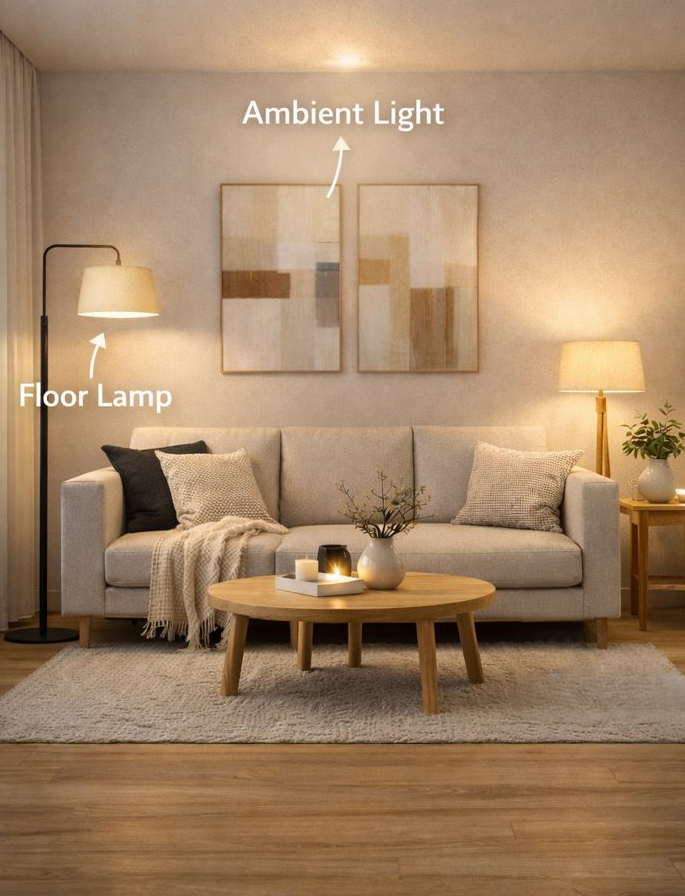
Layered lighting in a Scandi living
Small Scandi Living Room Decor Tips (Because Most of Us Don’t Have Mansion Square Footage)
If you’re styling a small Scandi living room decor setup, focus on these:
- One large rug (makes the room feel bigger)
- Curtains hung high (adds height; linen/sheers keep it airy)
- Closed storage (visual calm)
- One statement art piece (instead of many small ones)
The Bottom Line: “Scandi” vs “Scandinavian” Isn’t a Fight-It’s a Menu
Here’s the truth: you don’t have to pick one forever. You just need a clear starting point.
- Copy Scandinavian when you want timeless, functional calm.
- Copy Scandi when you want that modern, styled, Pinterest-clean finish.
- Copy hygge when you want the room to feel like a warm hug with good lighting.